Start With the Sheet, Not the Page: A Print Buyer’s Guide to Imposition Economics
A request for a quote on “a 32-page A4 brochure” sounds like a question about pages. In a litho factory it is a question about sheets. The page is the reader’s unit; the sheet is the production unit. Paper is bought by the sheet, plates are made for the sheet, and the press makes ready on the sheet. Once a print buyer understands that shift in perspective, many cost conversations that feel opaque become straightforward.
The sheet, not the page, carries the cost
Litho printing does not charge by the page in the way a digital click charge does. It charges for the materials and time needed to put ink onto a parent sheet, then cut and fold that sheet into pages. A B2 sheet, commonly 500 × 707 mm in the UK, will often carry four A4 pages per side — eight pages per sheet after backing up. A B1 sheet at 707 × 1000 mm carries more, but it also uses more paper per impression and may not suit a short run. Common litho sheets include B1, B2, SRA1 (640 × 900 mm) and SRA2 (450 × 640 mm). The exact house sheet varies by printer, which is why two quotes for the same finished job can differ before anyone has discussed margin.
The practical consequence is simple: a job that fits a printer’s standard sheet efficiently will usually cost less than a job that forces a larger sheet or leaves large unused areas. The finished page size matters, but it matters second. The first question is whether the pages can be arranged economically on a sheet the printer already runs regularly.
Imposition is the art of making pages fit
Imposition is the arrangement of pages on the sheet so that, after printing, folding and trimming, they appear in the correct order. A 16-page section is a common signature because it folds and binds efficiently. A 32-page job might be two 16-page sections, or one larger sheet if the press and finishing kit allow it. A 12-page job can work, but it may leave the printer using a sheet that could have carried 16 pages. That is not automatically wrong — a 12-page job is a legitimate format — but the buyer should know that the paper and press time are being shared across fewer pages.
Page counts that are multiples of four are the natural starting point for folded work. Multiples of eight or sixteen often impose more neatly. When a brief lands on 20 pages, the printer may need to run a 24-page sheet and leave four pages blank, or split the job into sections that do not divide evenly. The extra pages may cost very little in paper terms, but they still consume press time and plates. A buyer who can adjust pagination — adding a useful four-page case study, for example, rather than leaving blanks — can sometimes get a more substantial document for a marginal increase in cost.
Trim waste is a budget line, even when it is invisible
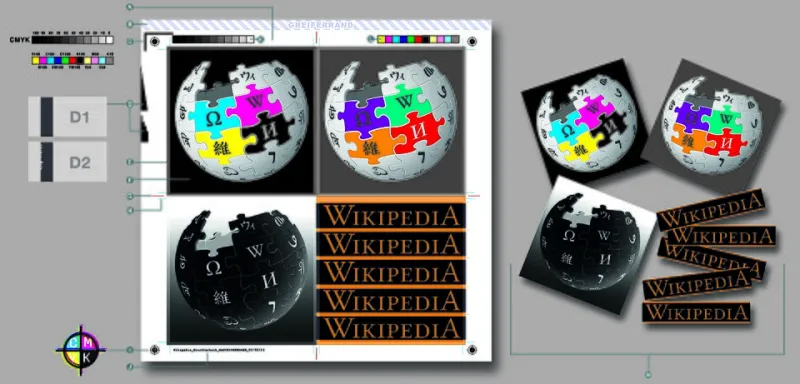
Every litho sheet needs a gripper margin for the press to hold it, gutters between pages, and trim allowance around the outside. Colour bars and register marks also take space. None of this appears in the finished brochure, but all of it is paid for. When a finished size is slightly too large for a standard imposition, the printer may have to step up to a bigger sheet, and the waste increases disproportionately.
This is why small format changes can have a surprising effect. A job designed at 210 × 297 mm may fit a standard sheet neatly; a job at 220 × 300 mm may not. Moving to a near-A4 format such as 210 × 280 mm, or to a standard B5, can sometimes improve the imposition without making the piece feel compromised. The reverse is also true: an unusual square or oversized format can be a deliberate design choice, but it should be priced as one. Ask the printer for an imposition diagram before approving the format. A simple line drawing showing pages, gutters and trim will explain more than a page of costing notes.
Practical adjustments that do not cheapen the job
There are several levers a marketer or print buyer can pull without resorting to thinner paper or a cheaper finish.
- Match pagination to the signature. If the content is close to 16 or 32 pages, consider whether a small amount of additional editorial could fill the section rather than leaving blanks. The extra pages may be cheaper than the waste.
- Ask about the house sheet. A printer’s standard B2 or SRA2 sheet may offer a better price than a special size. If the design can flex by a few millimetres, ask what format suits the press best.
- Treat the cover as a separate planning question. A 4-page cover on a heavier stock is often printed on a different sheet from the text. That is normal, but it should be reflected in the imposition plan rather than discovered at proof stage.
- Avoid page counts that force half-empty sheets. A 28-page job may be perfectly sensible, but it can require a combination of sections that leaves less efficient use of paper than a 32-page job.
- Check the finished size against standard envelopes and binders. A format that saves paper but does not fit a standard UK envelope or presentation folder has simply moved the cost elsewhere.
What to ask before you approve the proof
Before signing off, ask the printer three questions: what sheet size will this run on, how many pages go up per side, and where is the trim waste? If the answers are vague, ask for a blank dummy or an imposition plan. A good printer will not mind. The plan shows whether the job is using the sheet well or merely fitting onto it.
It is also worth asking whether the page count could change for a better result. A 20-page job that becomes 24 pages may not cost 20% more; it may cost very little more if it fills a sheet that was already going to run. That is the kind of conversation that belongs at planning stage, not after the plates have been made.
The page is what readers see; the sheet is what you pay for
Litho economics reward a certain amount of practical flexibility. The finished piece still has to look considered, read well and feel right in the hand. But within that brief, there is often room to adjust format or pagination so that the sheet works harder. In 2026, with paper and energy still significant line items, that is not a compromise. It is simply good production planning.