Offset or Digital? How to Settle the Short-Run Argument in 2026
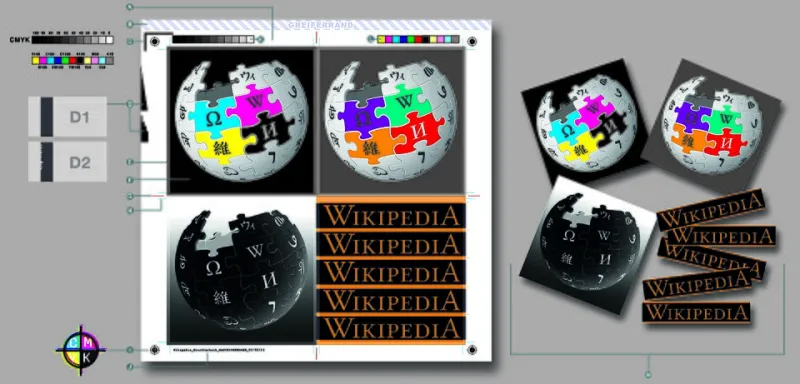
Photo: Auge=mit, CC BY-SA 4.0, via Wikimedia Commons
Few print arguments waste more time than the one that begins with 'digital is cheaper' or 'litho is better quality'. Both statements contain a grain of truth, and both are too blunt to guide a real buying decision. In 2026, digital presses are more capable and offset litho is more efficient than the caricatures suggest. The sensible question is not which process is superior in general, but which one fits the job in front of you.
The cost structure in plain English
Litho carries a relatively high fixed cost per job. Plates have to be made, the press has to be made ready, ink has to be balanced and the first sheets are wasted until the colour is right. Once the press is running, the cost per sheet is low. Digital has a lower fixed cost: there are no plates and make-ready is short. But the cost per sheet is higher, because toner or ink, maintenance and click charges are carried across the run. The break-even point is simply the quantity at which those two cost curves cross.
That sounds mathematical, but the crossing point moves with the job. A four-page leaflet on a standard silk has one break-even; a 32-page booklet with a heavy cover and complex finishing has another. Paper, sheet size, number of versions, colour coverage and delivery date all change the calculation. This is why a universal 'digital is cheaper under 500' rule is unreliable.
Why digital is not always the short-run answer
Digital is often the right choice for 20 to 100 copies, especially when the job is needed quickly. It is also the natural home for personalised or versioned work: variable names, regional offers, different covers for different audiences. But short does not automatically mean digital. If a short run needs a heavy board, a special uncoated stock or a large flat size that the digital press cannot handle economically, litho may still be the better route. Digital click costs can also rise sharply with heavy ink coverage on coated stock.
Versioning is a good example. Six versions of 100 copies is a digital job in most cases. Six versions of 5,000 copies may be a litho job with six sets of plates, because the make-ready is spread across a large run and the per-sheet saving outweighs the plate cost. The number of versions matters, but so does the number of copies per version.
Why litho is not always the quality answer
Offset litho remains excellent for long runs, large solids, fine detail and a wide range of stocks. It handles heavy boards, special colours and unusual paper sizes that digital may struggle with. For a 10,000-copy brochure, litho is likely to be more economical and more consistent across the run. But quality is not exclusive to litho. A short-run digital job on a good stock, with a well-prepared file and a competent operator, can look excellent. For 50 copies, digital may give you a better result than a litho job that has been rushed through a small make-ready window.
The real quality variables are file preparation, colour management, stock choice, calibration and finishing. A litho job printed on the wrong stock can look flat; a digital job printed on the right stock can look sharp and rich. Process is part of the picture, not the whole picture.
The break-even question to ask
Ask for quotes at several quantities: 250, 500, 1,000 and 2,500, for example. Ask for the same specification each time, including stock, finishing and delivery. Then look at the total cost, not just the unit price. A digital quote may look cheaper per copy at 250, but if it needs separate finishing or a stock that is not held, the gap can close. A litho quote may look expensive at 250, but if the job is likely to repeat, the plates and make-ready may be reusable or the quantity may increase.
Turnaround is part of the cost too. Digital can often be delivered in a few working days, sometimes faster. Litho usually needs more scheduling time, particularly for larger formats or specialist finishing. If the job is late, the cheapest quote is not cheap.
A rule-of-thumb table
Use this as a starting point, not a substitute for a quote. It assumes standard UK A4/A5 formats, ordinary commercial stocks and normal finishing.
| Job | Likely starting point | Why |
|---|---|---|
| 25–100 copies, 4pp A4 leaflet, 150gsm silk | Digital | Low make-ready; fast turnaround; litho fixed costs dominate. |
| 250 copies, 8pp A4 brochure, 170gsm silk | Check both | Digital may be close; litho can win if finishing is simple and delivery allows. |
| 500 copies, 16pp A4 brochure, 170gsm silk | Litho | Make-ready is spread across the run; per-sheet saving becomes significant. |
| 1,000 copies, 8pp A5 booklet, 200gsm cover | Litho | Litho is usually more economical once finishing and stock are included. |
| 2,500 copies, 4pp A4 leaflet, 130gsm gloss | Litho | Long run favours low per-sheet cost. |
| 50 copies, personalised 4pp A4 | Digital | Variable data is a digital strength. |
| 500 copies, six versions, 8pp A5 | Check both | Digital handles versioning; litho may win if each version is large enough. |
| 250 report covers, 300gsm uncoated | Check both | Stock handling and finishing can decide; digital may be limited by board weight. |
| 100 copies, 32pp A5 booklet | Digital | Short run and high page count usually favour digital. |
Questions that settle the argument
Before you choose, pin down the brief. How many copies are needed now, and how many might be needed in three months? How many versions? What is the flat size and page count? Which stock is essential, and which is negotiable? What finishing is required — folding, stitching, laminating, spot UV, mailing? When is the delivery date? Once those answers are clear, ask for both processes where appropriate and compare like with like.
A good print partner should be willing to say when digital is the sane choice, even if their main business is litho. At Argent Litho, we would rather explain the break-even than defend a process. The right answer in 2026 is rarely 'always digital' or 'always litho'. It is the process that matches the quantity, the stock, the finishing and the deadline — and that can be explained without a spreadsheet argument.