Which Way the Fibres Run: Specifying Grain Before It Becomes a Fold Problem
Paper is often treated as a flat, neutral surface. It is neither. Most printing papers are made from fibres that align as the sheet is formed, and that alignment gives the sheet a direction. Grain direction is the result. It is one of the few paper decisions that cannot be corrected after the ink is on the sheet, which is why it deserves a place in the specification rather than a footnote on the docket.
What grain direction actually means
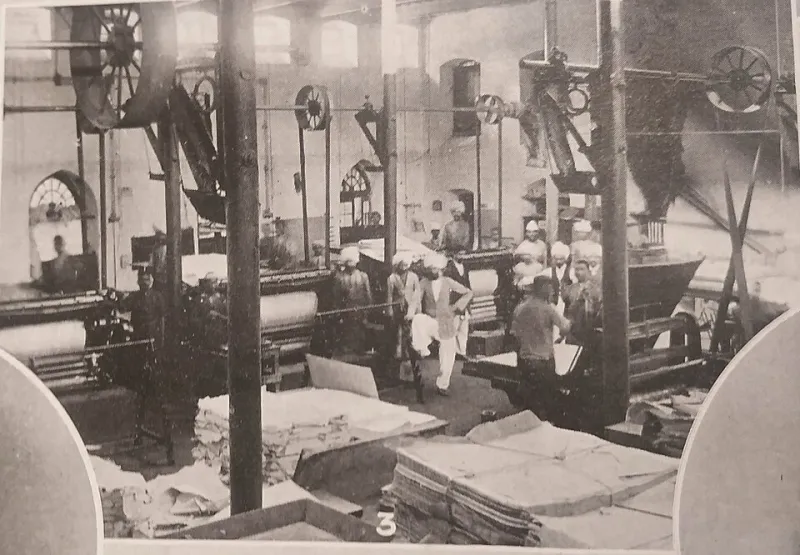
During paper manufacture, fibres tend to line up with the direction of travel through the machine. The result is a sheet with a grain direction, often described as long grain or short grain depending on how the sheet is cut relative to that alignment. A long-grain sheet has grain running parallel to its longer edge; a short-grain sheet has grain running parallel to its shorter edge. The distinction sounds academic until the sheet is folded, bound or exposed to changing humidity.
Why the problem appears after printing
Printing can hide a great deal. A sheet may run through a litho press without obvious complaint, only for the finishing stage to reveal that the grain is running the wrong way. Folding is the most common place for the problem to show. A fold made across the grain puts stress on the coating and the fibre structure; on coated stocks, that stress can appear as cracking along the fold. Scoring can reduce the risk, but it is a treatment, not a cure. If the grain is wrong for the format, the finished piece may still look acceptable on the day and deteriorate as it is handled.
Folding and scoring
Folds run more cleanly when the fold line follows the grain. A with-grain fold bends the sheet in the direction its fibres already favour. An against-grain fold asks the paper to do something less natural, and the result is more likely to crack, particularly on heavier coated stocks and on folds that run close to a printed solid. This is why a folded dummy matters. A flat proof can show colour and layout; it cannot show how a fold will behave. If the job depends on a crisp fold, the grain direction should be agreed before the stock is ordered.
Binding and the spine
Binding adds another set of demands. For perfect-bound books and booklets, the grain should generally run parallel to the spine so that pages turn and lie with less resistance. Saddle-stitched work also benefits from grain running in the right direction relative to the spine, especially where the piece needs to open flat or sit neatly when closed. A bound job with the grain running the wrong way can feel stiff, resist opening and put strain on the spine. Those are not printing faults in the ordinary sense, but they are production faults all the same.
Dimensional stability and register
Paper responds to humidity. It expands and contracts, and it does so more across the grain than along it. In a litho pressroom, that matters for registration and for consistency across a run. If sheets from different parent sizes or different grain directions are mixed, the paper can behave differently under the same conditions. The result may be registration drift, inconsistent fit between colours or a finishing problem that only becomes visible when the sheets are trimmed and folded. Consistent grain direction is therefore not just a finishing concern; it is part of a stable production plan.
How to specify grain early
The buyer does not need to become a paper technologist, but the specification should state the finished format and the direction in which the piece will fold or bind. For a portrait booklet, say that the grain should run parallel to the spine. For a folded leaflet, give the finished size and the fold direction. Ask the printer to confirm the grain of the proposed stock and to mark it on the docket. If the job is being printed on a house stock, ask whether the grain direction can be guaranteed for the quantity required. If it cannot, that is useful information before plates are made.
When a compromise is reasonable
Not every job needs a laboratory-level approach. A single-sheet flyer that is not folded may tolerate a wider choice of grain. An uncoated stock may fold better than a heavily coated one even when the grain is less than ideal. But where the piece will be folded, bound or handled repeatedly, grain is part of the specification, not an afterthought. If the preferred stock cannot be supplied in the right grain, the better answer may be to change the stock, adjust the format or plan extra scoring. What is rarely sensible is to hope the finishing house will make it work.
A short checklist for UK buyers
State the finished size and orientation. State where the spine or main fold will fall. Ask for grain direction in writing. Confirm the parent sheet size and how it will be cut. Approve a folded dummy where the job depends on a clean fold. Keep the grain direction consistent across the run. These points take very little time at the quotation stage and can save a great deal of explanation later.
The decision that shows up last
Grain direction is easy to overlook because it does not appear in a PDF and cannot be judged from a colour proof. It shows up in the hand, in the fold and in the way a bound piece opens. For a print buyer, that makes it a useful test of a supplier's attention. A printer who asks about grain before quoting is thinking about the finished object, not just the sheet. A buyer who specifies it early gives the job a better chance of feeling crisp rather than cracked.