Evidence, Not Adjectives: Auditing Environmental Claims on a Litho Estimate
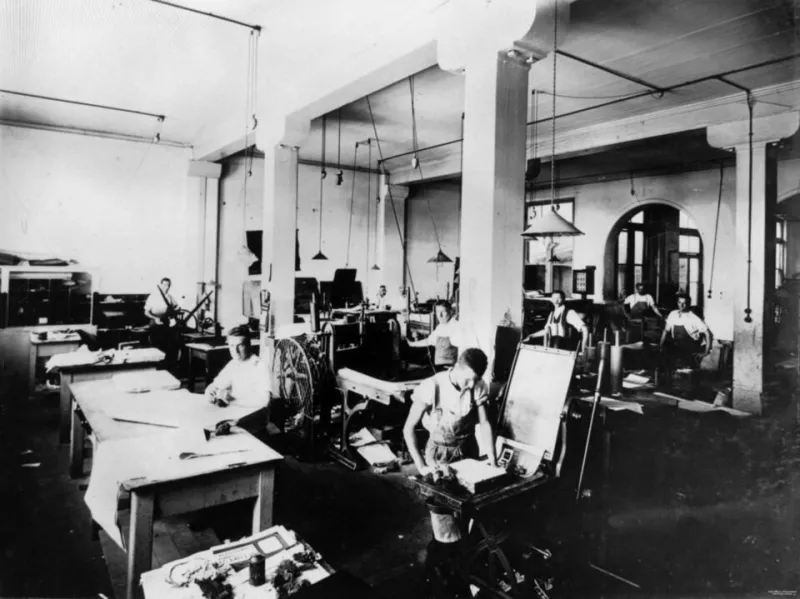
Photo: Unknown, Public domain, via Wikimedia Commons
An environmental claim on a litho estimate is not decoration. Once it is repeated in a tender response or a customer promise, it becomes your claim, with your name behind it. The useful question is therefore not whether the wording sounds responsible, but what evidence sits behind it and whether that evidence covers the job you are buying.
In the UK, the Competition and Markets Authority's Green Claims Code and the advertising rules enforced by the Advertising Standards Authority both place weight on clear, substantiated claims. A buyer who copies a supplier's wording without checking it can inherit the problem. The practical response is to treat every green line on an estimate as a claim to be evidenced, not an adjective to be admired.
Start with the paper, because it carries the most weight
Paper is usually the largest single material input in a litho job, so certified stock is where verification begins. FSC and PEFC are the two certification schemes a UK buyer is most likely to see. A certificate number on an estimate is a starting point, not proof. Ask for the printer's chain-of-custody certificate number and the specific product certification claim. Check the certificate on the issuing body's public database and confirm its scope: does it cover the printer, the merchant, the mill and the grade being quoted?
For a printed piece carrying the FSC logo, the printer must hold chain of custody and the job must be covered by the correct licence arrangement or project code. A logo copied from a paper swatch is not sufficient. The same discipline applies to PEFC. If the claim is 'FSC certified' but the quoted stock is not covered, the claim belongs to a different job.
Recycled content needs definition as well. Pre-consumer waste and post-consumer waste are not the same, and the recognised recycled labels have thresholds. Ask for the mill's product declaration and the percentage by fibre type. Recycled paper is not automatically lower in carbon: deinking, transport, furnish and mill energy all matter. A credible claim will say which recycled content is meant, not simply that the sheet is recycled.
Carbon-neutral wording needs a boundary and a method
'Carbon neutral' is the phrase most likely to cause difficulty. It can mean emissions measured and reduced, or emissions measured and then offset. Those are different propositions. Ask for the boundary: cradle-to-gate, cradle-to-grave, or gate-to-gate? Does the figure include paper, plates, ink, energy, spoilage and delivery? Ask for kilograms of CO2 equivalent per 1,000 sheets or per copy, the methodology used, the emission factors and the date of the data.
If offsets are involved, ask for the project, the standard and evidence that the credits have been retired. A verified reduction claim is stronger than a compensated one, but both need a paper trail. A statement that a printer is 'carbon neutral' at company level does not automatically make a specific job carbon neutral. The allocation method matters, especially when one plant runs several jobs and several paper stocks.
Inks, energy and delivery: useful, but easy to overstate
Vegetable-based inks are common and can be a genuine improvement on mineral-oil-based products, but the phrase does not mean biodegradable or compostable. Ask for safety data sheets, bio-based content and any low-migration certification if the work is for food packaging. For most commercial litho, ink is a small part of the footprint; paper and energy dominate. An ink claim should not distract from the stock and run planning.
Renewable electricity claims can be checked at supplier level through REGO-backed tariffs, but allocating plant electricity to one job is an estimate. Ask whether the figure is based on actual meter data, a site average or a market-based tariff. ISO 50001 certification shows management discipline, not a product carbon label. It is useful context, not proof of a job-level claim.
Delivery is often excluded from environmental statements. Ask whether the carbon figure includes transport to the loading bay and whether consolidated routes or backhaul are used. For UK work, the last leg can matter more than a nominal paper saving, particularly on small, frequent deliveries. If delivery is outside the boundary, the claim should say so.
What a logo does and does not prove
ISO 14001 is an environmental management system certification. It does not certify a printed product. A recycled symbol is not a recyclability claim. Carbon Trust labels and similar marks have specific scopes and rules. Every mark should be checked against its owner's published conditions, and the printer should be able to show that the job falls within the scope.
Questions to put before the claim goes into a tender
- What exactly is the claim, in one sentence, and which part of the job does it cover?
- Which certificate, declaration or method statement supports it, and what is the certificate number and scope?
- Is the carbon boundary cradle-to-gate, cradle-to-grave or something narrower?
- What data was used, from which year, and who verified it?
- Are offsets used, and if so, what project, standard and retirement evidence apply?
- Is the figure per job, per 1,000 sheets or per copy, and how is it allocated?
- What is excluded: delivery, spoilage, plates, ink, or the paper itself?
- What happens to the claim if the paper stock or run length changes?
A green claim does not have to be avoided; it has to be owned. Put an evidence schedule alongside the price schedule and ask for certificates, declarations and method statements before the job is awarded. If a supplier cannot provide them, remove the adjective rather than carry the risk. A logo is not a file, and a slogan is not a method. The buyer's protection is the same as it is for colour, grain or delivery: agree the detail before the plates go on.